
2025 MT Housing Market Report & 2026 Outlook

2025 Recap and 2026 Outlook
Time feels like it moves faster every year, which is why it’s worth taking a moment to pause and reflect. In this update, I’ll recap what defined the 2025 housing market and economy, and what those trends could mean for 2026.
If I had to sum up the local market in one word, it would be “unexciting.” The year lacked dramatic swings statistically, but it was far from uneventful. While Montana's economy and job growth slows, there are major economic events reshaping our landscape such as income and property tax reform, mixed-use developments on the rise, and major businesses planting roots in Montana.
Personally, I’m deeply grateful for the trust and support of my clients, friends, and partners. Jonathan and I celebrated our one-year anniversary in September and continue to enjoy all the activities Montana has to offer. I remain committed to putting my clients first and keeping my network informed, prepared, and connected.
Who Is Moving to Southwest Montana?
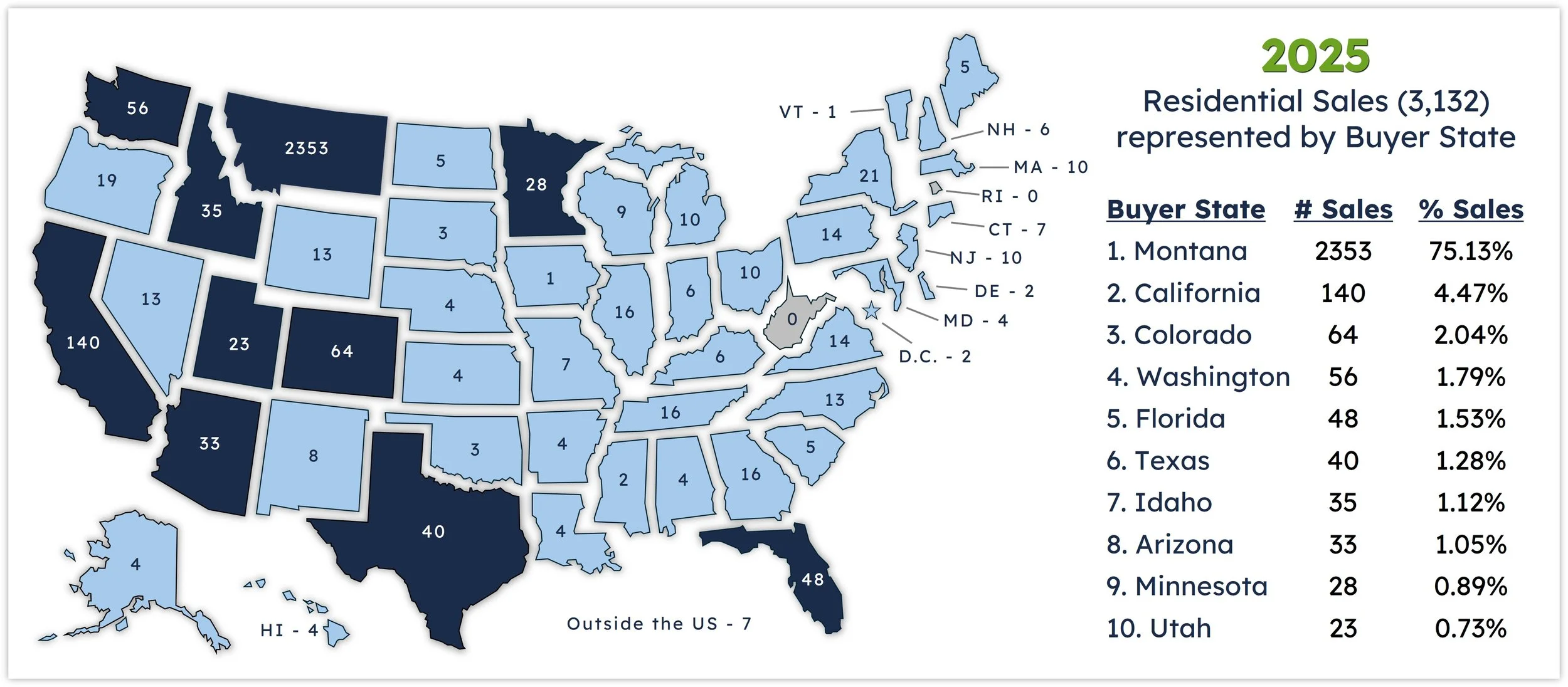
Montana continues to attract buyers from across the country, with California and Colorado consistently leading the way. In 2025, the top states sending buyers to Montana were California, Colorado, Washington, Florida, and Texas, a slight shift from 2024 when Texas ranked higher.
Out-of-state buyers accounted for 24.87% of the 3,132 residential sales last year, while the remaining transactions were Montana residents relocating within the state.
The graphic below shows the breakdown of MLS sales by buyer state.
Residential homes represent 72.2% of all property sales, which is the focus of this data. The Big Sky Country MLS tracks property sales across Beaverhead, Broadwater, Deer Lodge, Gallatin, Granite, Jefferson, Madison, Meagher, Park, Silver Bow, and Sweet Grass counties.
National and Local Market & Economic Trends
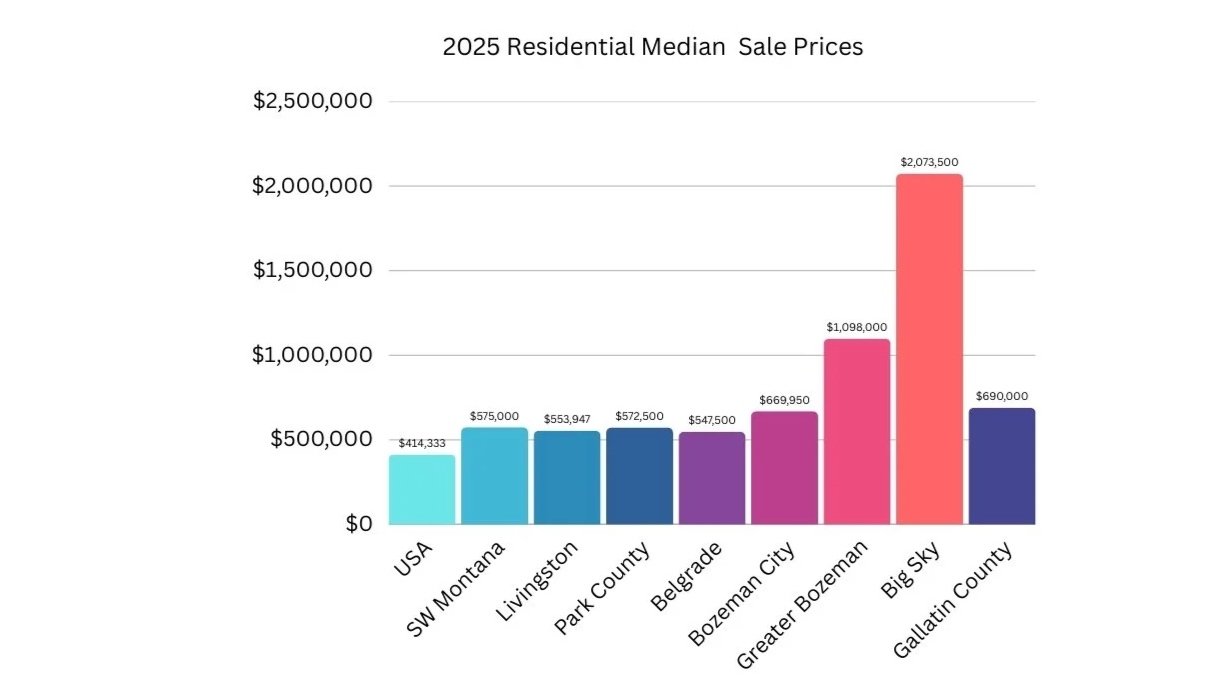
Nationally, the housing market was largely flat in 2025. Existing home sales totaled 4.06 million, essentially unchanged from the year before. Despite slower activity, the median home price still rose 1.6%, reaching a record high of $414,300.
New home sales softened slightly. An estimated 679,000 new homes sold in 2025 with a median price of $414,400. That's down 1.1% in sales and about 2% in price compared to 2024.
Some of these trends are also appearing locally. After several years of rapid growth, Montana is entering a slower phase across both housing and broader economic indicators. Population growth has slowed to 0.52%, the lowest level in two decades, while year-over-year job growth remains largely flat. However, average incomes are on the rise. The tech sector continues to lead earnings growth, while traditional resource industries such as mining, timber, and agriculture face ongoing challenges. Meanwhile, healthcare employment has grown significantly both locally and nationally as the population ages. Montana’s unemployment rate remains low at 3.3%, compared with the national rate of 4.6%.
In our region, home sales increased 3.74% while the median sales price declined slightly by 1.71% to $575,000. Sales volume rose 1.6%, suggesting continued demand and a growing share of higher-priced homes in the market.
New listings, days on market, and months of inventory have all increased, reflecting a market that is stabilizing after the rapid pace seen between 2020 and 2022. Overall, the market appears to be moving toward a healthier balance between buyers and sellers, though conditions can vary depending on location and price range.
Local trends also differ by community. Within Bozeman city limits and in Belgrade, both sales and median prices increased. However, sales volume declined in Belgrade while rising in Bozeman, highlighting the continued growth of higher-end homes within the Bozeman market.
TLDR:
National housing: Existing home sales were flat in 2025, but prices still hit a record high (~$414k), while new home sales and prices declined slightly.
Montana economy: Population growth has slowed significantly and job growth is flat, though tech and healthcare are strong while resource industries face challenges.
Local market: On the SW Montana MLS, home sales rose ~3.7% but the median price dipped slightly to about $575k.
Overall trend: More listings and longer time on market suggest the housing market is cooling and becoming more balanced after the rapid growth from 2020–2022.
Please feel free to reach out anytime for additional market data or more detailed insights. I am always happy to provide guidance and help you navigate the real estate market.
Existing Home Sales - National Associaiton of Realtors
New Residential Sales - United States Census
US & Montana Economic Outlook - Bureau of Business & Economic Research MSU
National Buyer and Seller Profiles
As the economy and housing market continue to evolve, so too do the characteristics of buyers and sellers. What remains constant, however, is the desire among buyers to own a home and make a sound financial investment, while sellers are often seeking to upsize, downsize, or be closer to family and friends.
3 Key Highlights:
The median first-time buyer age increased again to 40 years old this year, up from 38 last year, while the typical repeat buyer age also increased to 62 years from 61 last year.
Among home buyers, 61 percent are married couples, 21 percent are single women, and nine percent are single men.
The typical age of a home seller was 64 this year, the highest ever recorded.
Read the National Association of Realtors Report
National vs Montana Appreciation
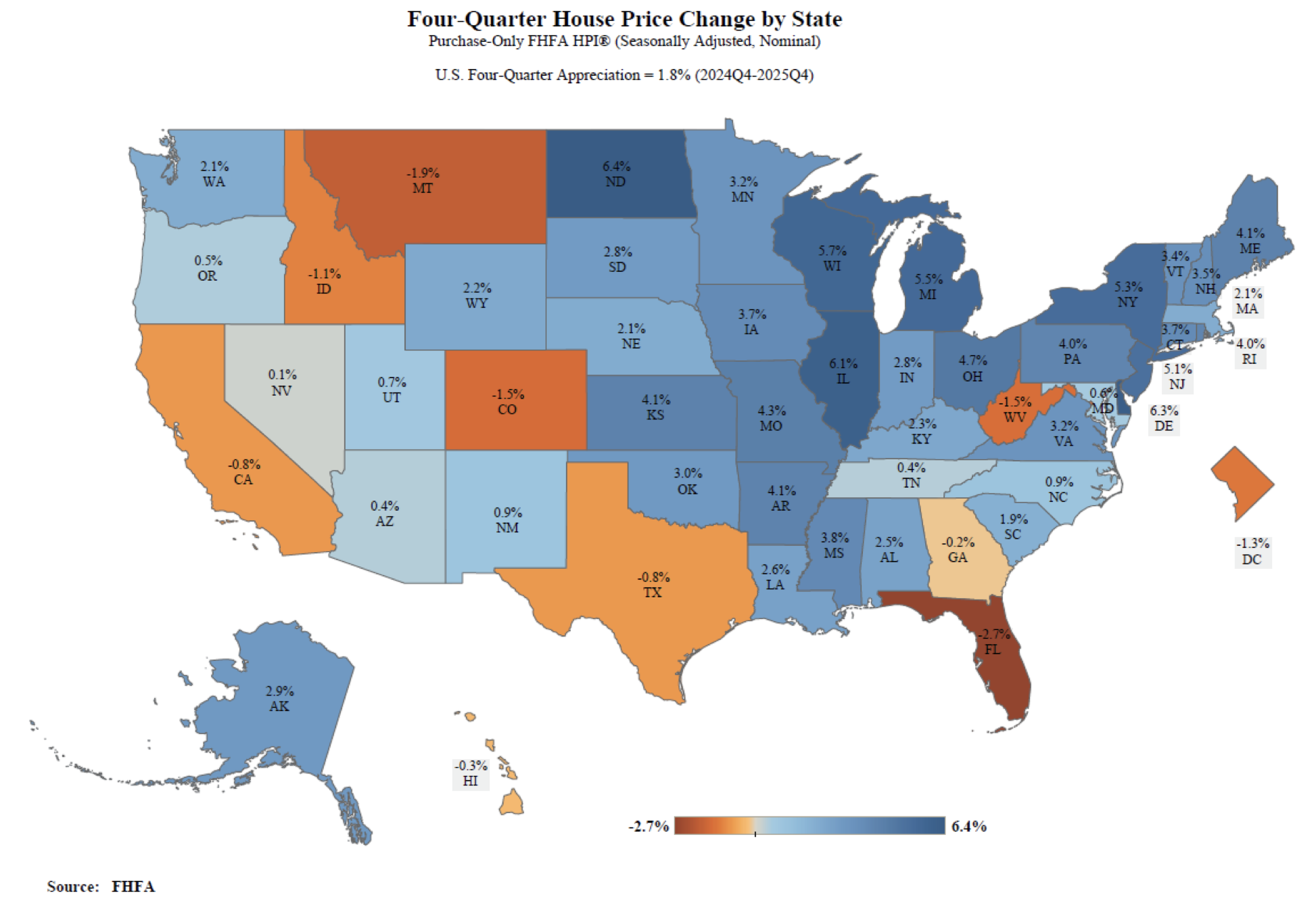
Housing prices continued to rise across most of the United States in 2025, though at a slower pace than the year before. According to the Federal Housing Finance Agency (FHFA) House Price Index, U.S. home prices increased 1.8% from Q4 2024 to Q4 2025, compared to 4.5% growth the previous year. This marks consistent positive annual appreciation every quarter since 2012. In fact, a handful of states saw slight declines in home prices this past year.
Montana's Long-Term Home Value Growth
In today’s more subdued market, Montana home values dipped slightly, with appreciation decreasing 1.9% in 2025. This follows a much stronger year in 2024, when Montana posted 6.78% appreciation and ranked 11th in the nation.
Despite this short-term slowdown, the long-term story remains remarkable. Since 1991, home values in Montana have increased an astonishing 621.47%, placing the state second in the nation for long-term appreciation, just behind Utah. This sustained growth highlights the strength of Montana’s housing market and the significant returns homeowners have seen over time.
Read the house price index report
Interest Rates
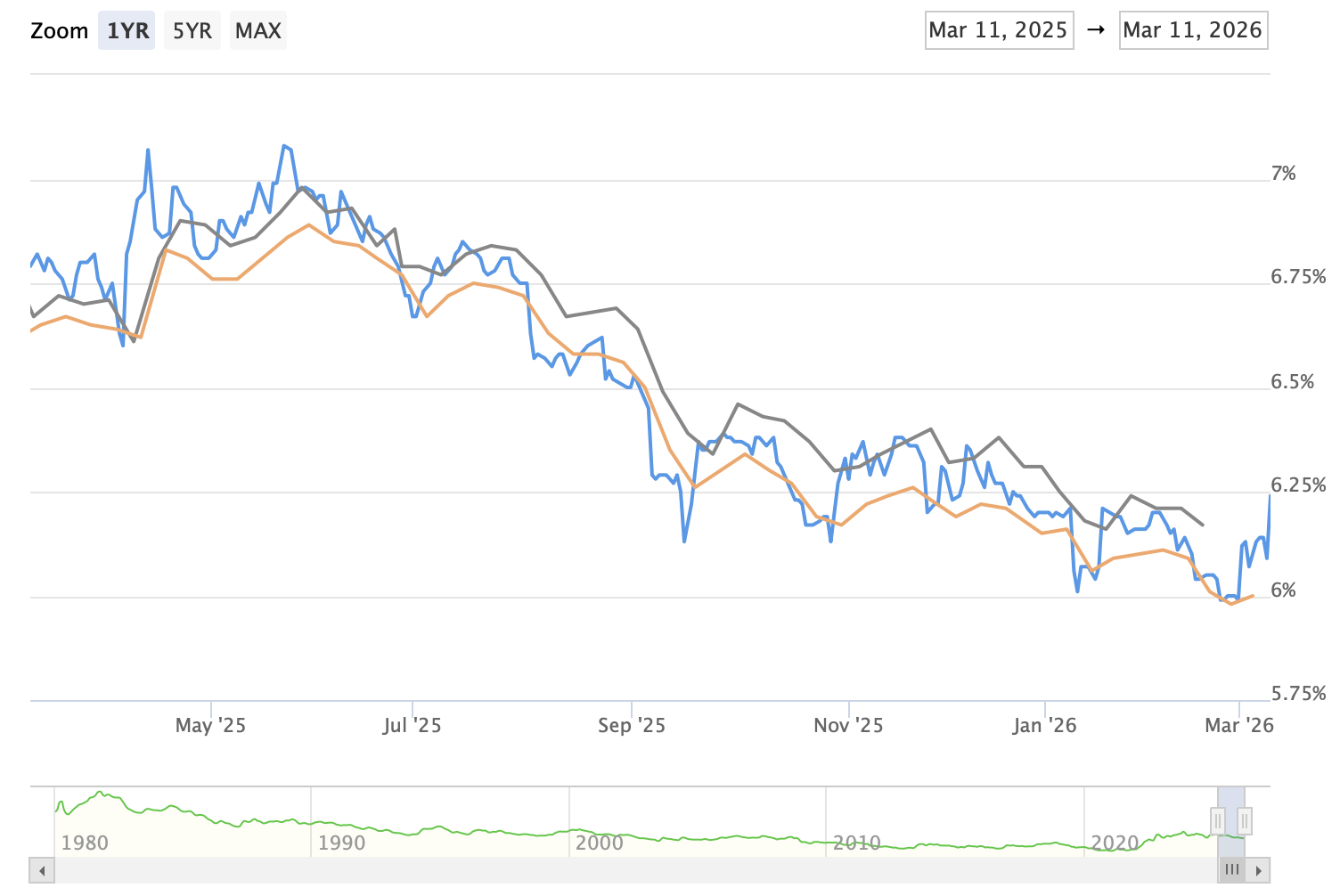
The current 30-year fixed mortgage rate is approximately 6.24%, with many forecasts suggesting relative stability in the near term. Rates have continued their gradual decline from the peak of roughly 8% in October 2023. In 2025, mortgage rates briefly dipped below 6%, triggering a surge in refinancing activity. Looking ahead, economists generally expect interest rates in 2026 to settle in the high-5% to low/mid-6% range.
What Are Buyers Doing?
Buyers are adapting to a more stable interest-rate environment. With the market cooling from the rapid pace of previous years, buyers are gaining greater negotiating power and securing more seller concessions, including rate buy-downs. Many buyers are also increasing their down payments and turning to family support, through gifts or private loans, to strengthen their purchasing power. Additionally, cash buyers remained active throughout 2025, continuing to play a significant role in the market.
Predictions for 2026
Several key issues will shape real estate discussions in the coming year, including affordability, land use, zoning changes, exempt wells, short-term rental regulations, and potential tax policy adjustments.
While national economic and political events may influence the broader housing market, Montana’s continued population and economic growth, along with its appeal as a place offering open space and a high quality of life, should help keep our local market relatively stable. I expect another steady year for our area, with little to modest change in both the number of sales and median home prices. The luxury segment will remain a significant driver of overall sales volume.
It will be interesting to see where the market stands by the end of 2026.

